Keeping your home secure starts with choosing the right door lock. Traditional locks are useful, but smart door locks offer additional ways to control who can enter your home. Depending on the model, you can unlock the door using a fingerprint, PIN code, access card, or smartphone.
Smart locks are becoming a practical choice for apartments, independent houses, and modern smart homes. They combine everyday convenience with features that help homeowners manage access more easily.
In this guide, we will explain the different types of smart locks, their security features, and how to choose the right smart door lock for your home.
What Is a Smart Door Lock?
A smart door lock is an electronic locking system that allows you to lock and unlock a door using methods other than a traditional key alone.
Many models support multiple access methods, so family members can choose the one that suits them best.
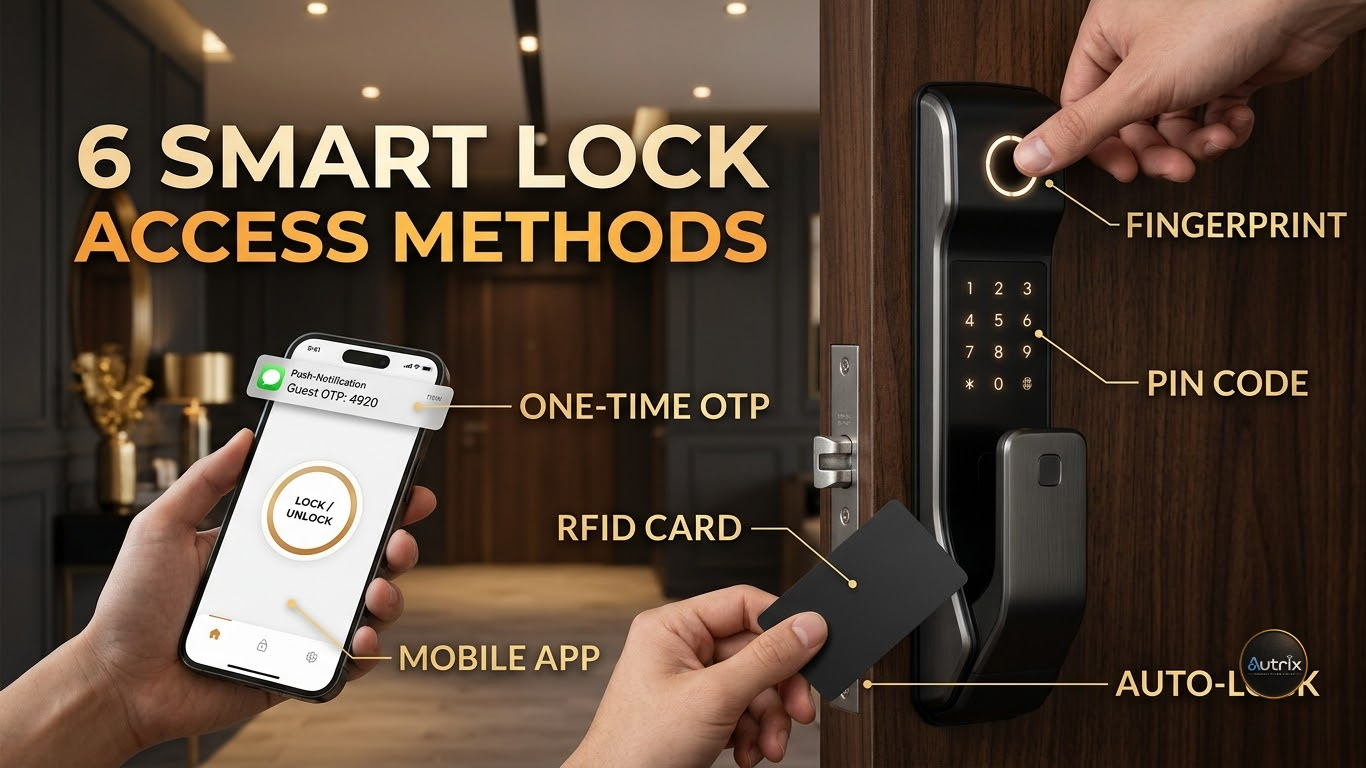
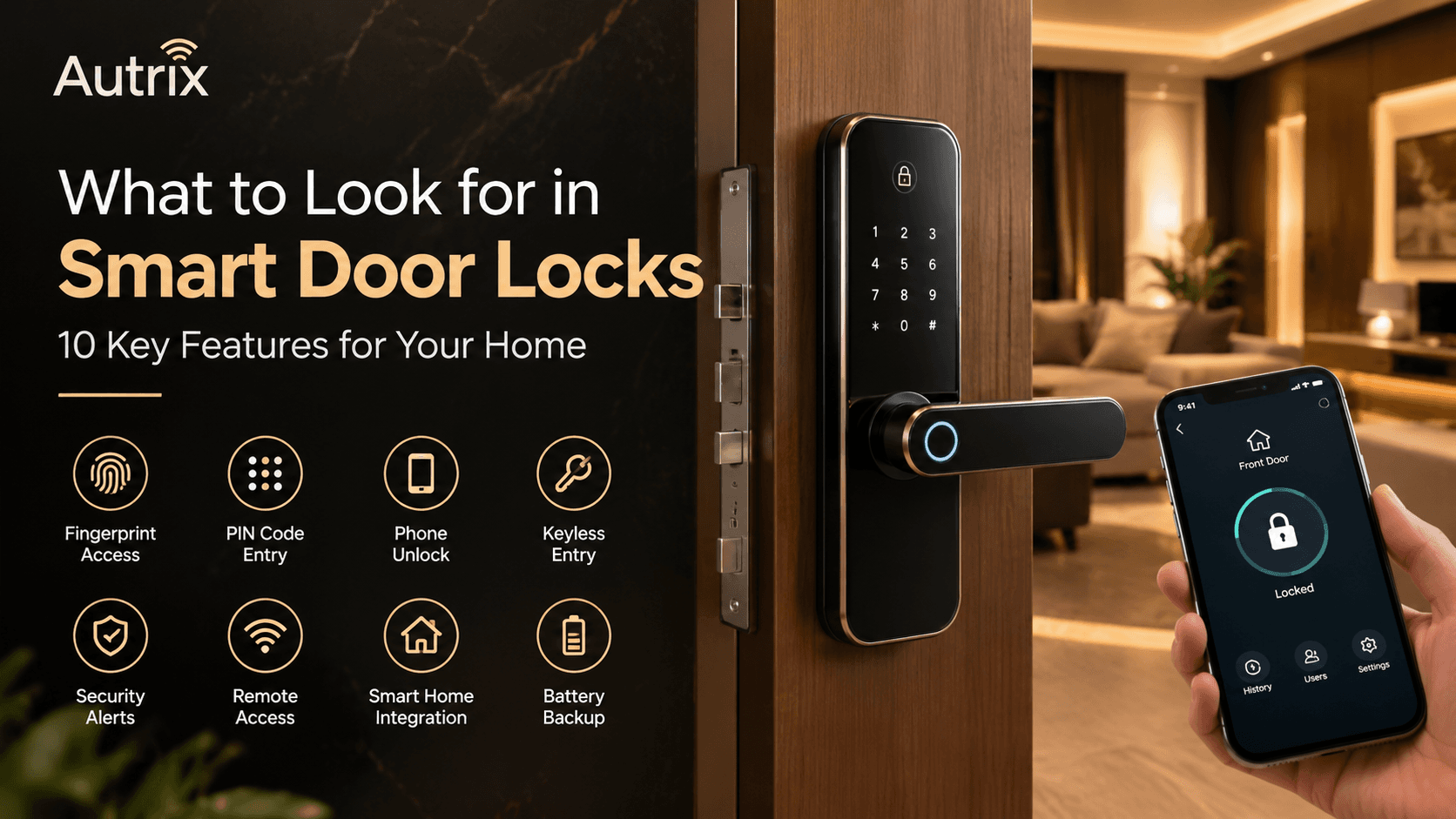
Common smart lock features include:
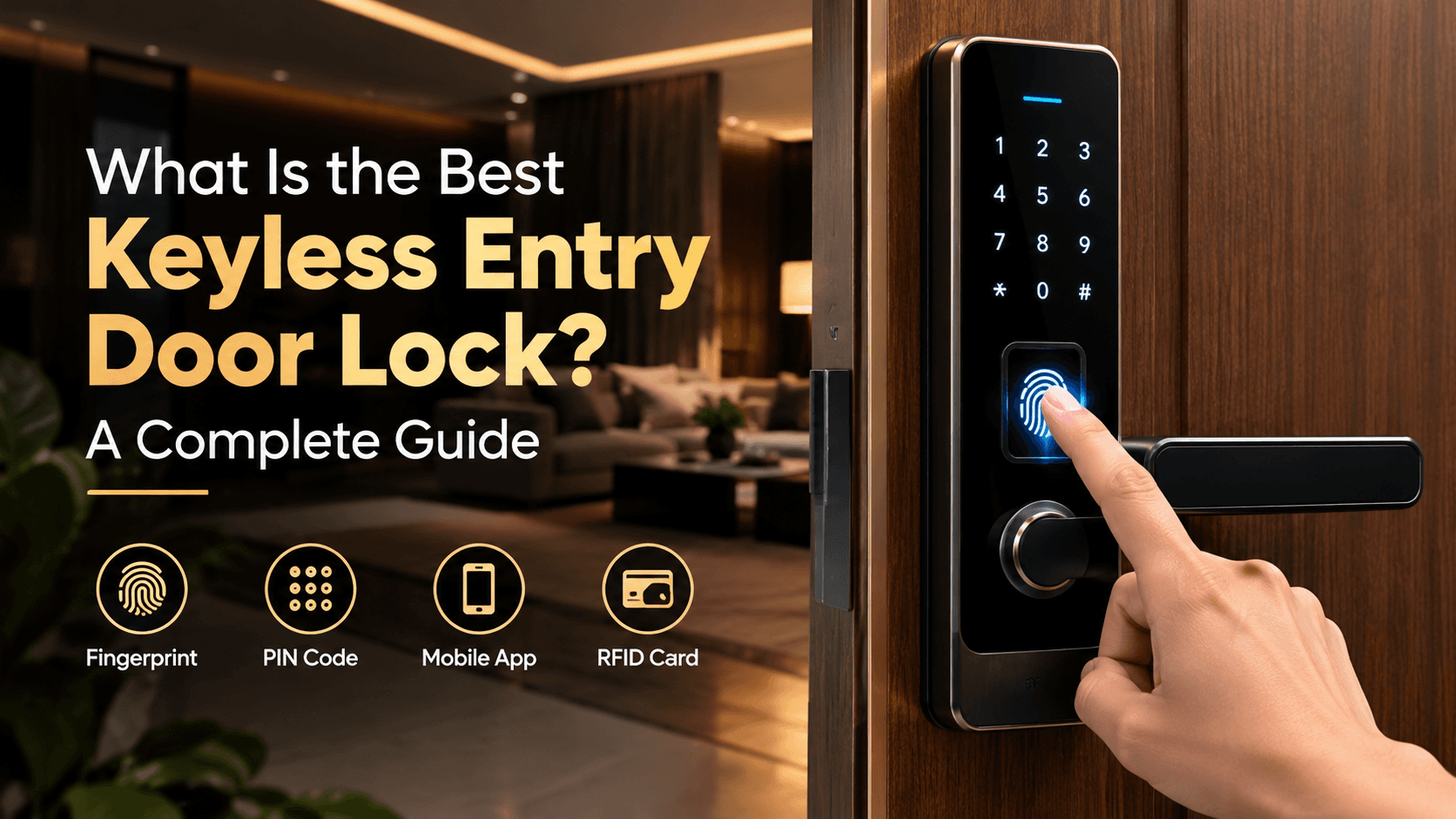
Fingerprint access: Unlock the door using a registered fingerprint.
PIN code access: Enter a personal code on a keypad.
Mobile app control: Manage supported lock functions through a smartphone.
RFID cards: Unlock the door using a registered access card.
One-time passwords: Provide temporary access on compatible models.
Automatic locking: Lock the door automatically after it closes, where supported.
The available features depend on the model, so check the manufacturer's specifications before buying.
5 Types of Smart Locks for Home Security
The best smart lock depends on your door, household needs, and preferred access method.
1. Fingerprint Smart Door Locks
Fingerprint door locks let registered users unlock the door without carrying a key or remembering a PIN.
They are useful for families who enter and leave their homes several times a day.
Key benefits:
Quick access for registered family members.
No need to carry a physical key for everyday entry.
Multiple fingerprints can be registered on supported models.
Some models combine fingerprint access with PIN codes and physical keys.
Before buying, check the fingerprint sensor's performance, user capacity, and backup unlocking options.
2. PIN Code Smart Locks
PIN-based smart locks use a keypad to unlock the door with a security code.
They can be useful when family members do not want to use fingerprint access or when you need to provide access to a trusted visitor.
Look for features such as incorrect-code lockout, concealed PIN entry, and temporary access codes where available.
Avoid simple codes such as birthdays or repeated numbers. Change access codes whenever necessary, especially if they may have been shared with someone who no longer needs access.
3. Wi-Fi and App-Controlled Smart Locks
Wi-Fi-enabled smart locks can offer remote access and notifications through a compatible mobile app.
Depending on the model, you may be able to check the lock's status, manage user permissions, or grant access while you are away. Some locks require a separate hub or gateway for remote control.
These locks are suitable for homeowners who want to manage access more conveniently.
However, remote features depend on connectivity, app support, and the manufacturer's service. Choose a model with regular software updates and secure account protection.
4. RFID Card Smart Locks
RFID smart locks use registered cards or tags to unlock a door.
They can be convenient for households with several users who prefer not to share a PIN or register fingerprints.
Some models allow lost cards to be removed from the system, preventing those cards from being used for future access.
Check how easily you can add and remove users, and keep a secure backup access method available.
5. Multi-Access Smart Door Locks
Multi-access smart locks combine several unlocking methods in one device.
For example, a lock may support fingerprint, PIN, RFID card, mobile app, and mechanical key access.
This flexibility is useful for families with different preferences. One person may prefer a fingerprint, while another may use a PIN.
For a main entrance, a multi-access lock with a reliable backup method is often worth considering.
What Features Should You Check Before Buying a Smart Lock?
A smart lock should offer more than a modern design. Consider these important features before making your decision.
Strong physical construction: Check the locking mechanism, materials, and compatibility with your door.
Reliable access methods: Choose options that are convenient for your household.
Battery warnings: Low-battery alerts give you time to replace the batteries.
Emergency access: Look for a mechanical key or another manufacturer-approved emergency power option.
Tamper alerts: Some models notify you when suspicious activity or tampering is detected.
Auto-lock function: This can help prevent the door from being left unlocked, provided the door closes properly.
Privacy and app security: Use strong account passwords and enable two-factor authentication if supported.
Installation and after-sales service: Check warranty coverage, installation costs, and local service availability.
A smart lock does not make a door completely burglar-proof. Its security also depends on the door, frame, installation quality, and the rest of your home security arrangements.
Which Smart Lock Is Best for Your Home?
There is no single smart lock that suits every home. Your choice should depend on how you use your entrance and which features matter most.
Your requirement | Type to consider |
|---|---|
Easy everyday entry | Fingerprint smart lock |
Simple access for several users | PIN code or RFID lock |
Remote access management | Wi-Fi or app-controlled lock |
Multiple unlocking options | Multi-access smart lock |
A premium connected home | Smart lock compatible with your automation system |
Before purchasing, confirm that the lock fits your door's thickness, material, opening direction, and existing hardware. Wooden, metal, glass, and specially designed doors may require different lock types.
How Smart Door Locks Work with Home Automation
A smart door lock can be part of a wider home automation system rather than operating as a standalone device.
Depending on compatibility, it may work alongside security cameras, door sensors, smart lighting, and other connected devices.
For example, a suitable automation setup might switch on selected lights when you arrive home or activate an agreed security scene when you leave. These functions require compatible devices and appropriate configuration.
For homeowners planning a connected property, Autrix home automation solutions can help bring different home functions into a more convenient control system.
You can also consider lighting automation to manage lights through schedules, scenes, and compatible controls.
How Autrix Can Help with Smart Home Security
Choosing the right security equipment is an important part of planning a smart home. The system should suit your property, daily routine, and future requirements.
Autrix provides home automation solutions covering security, lighting, curtains, climate control, and entertainment.
When planning your smart home, consider how smart door locks can complement other security devices and automation features. Check that the selected lock is compatible with the wider system before expecting integrated control.
Whether you are building a new home or upgrading an existing property, a well-planned automation setup can make daily control more convenient while supporting your home security arrangements.
Visit Autrix to learn more about home automation options for modern living.