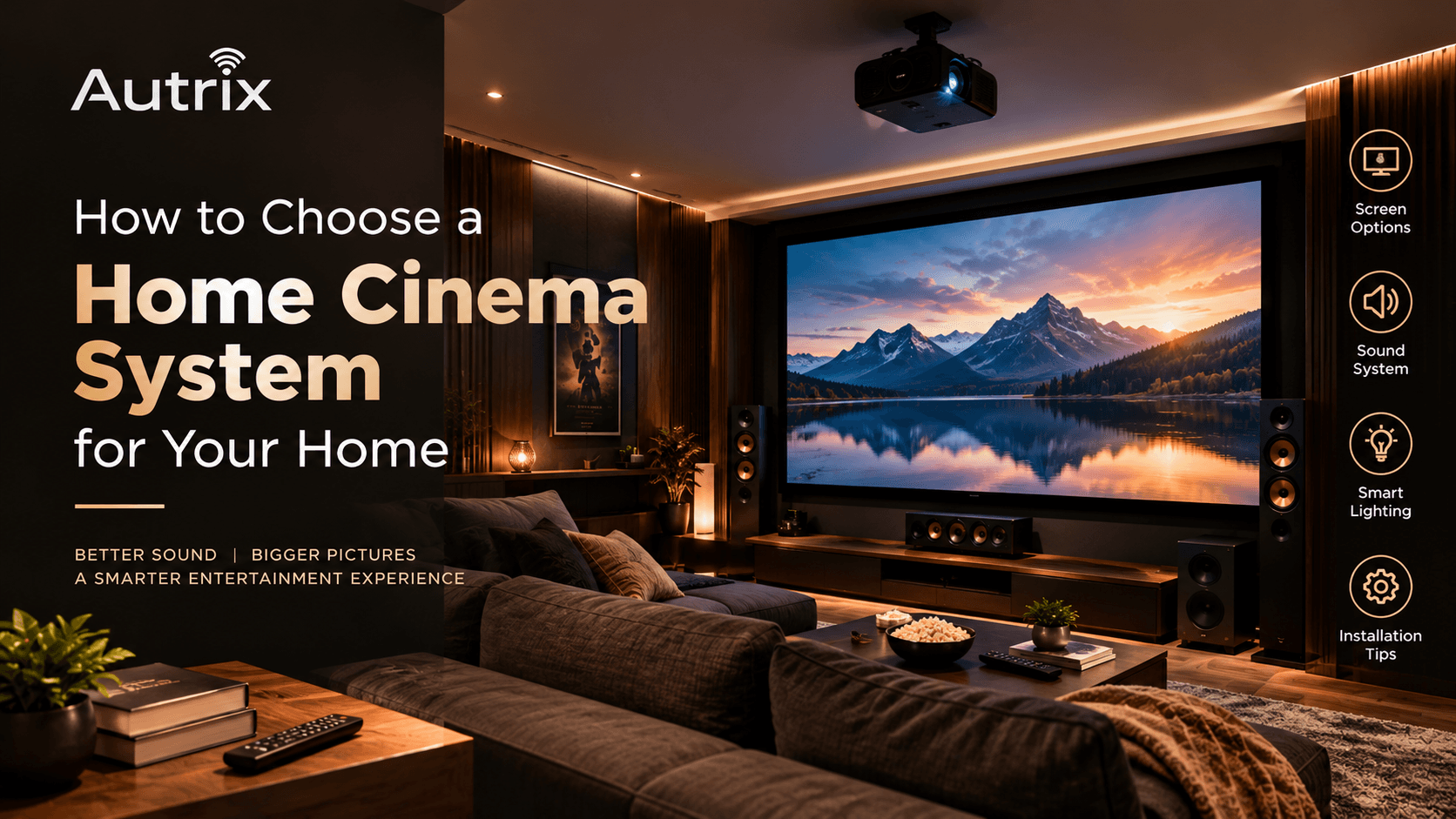
Choosing the right home cinema system can make movies, sports, and TV shows more enjoyable. However, the best system is not always the most expensive one. You need to consider your room size, sound quality, screen options, budget, and entertainment needs.
Here are the important things to consider when choosing a home cinema system for your home.
1. Choose the Right Screen Size
The screen is one of the most important parts of a home cinema setup. You can choose between a large television and a projector with a dedicated screen.
Large TV: Suitable for bedrooms, living rooms, and smaller entertainment spaces.
Projector: A good option for a dedicated home cinema room with a large viewing area.
Viewing distance: Choose a screen size that suits your room and seating position for comfortable viewing.
Also, consider the room lighting before choosing a projector, as bright rooms can affect picture quality.
2. Select the Right Home Cinema Sound System
Good sound makes movies feel more realistic. When choosing a home cinema sound system, consider the number of speakers, sound clarity, and bass performance.
2.1 channel system: Includes two speakers and a subwoofer for improved TV sound.
5.1 channel system: Includes five speakers and one subwoofer for an immersive surround sound experience.
7.1 channel system: Adds more surround speakers for a wider sound experience in suitable rooms.
Dolby Atmos system: Creates a more three-dimensional sound experience with compatible equipment.
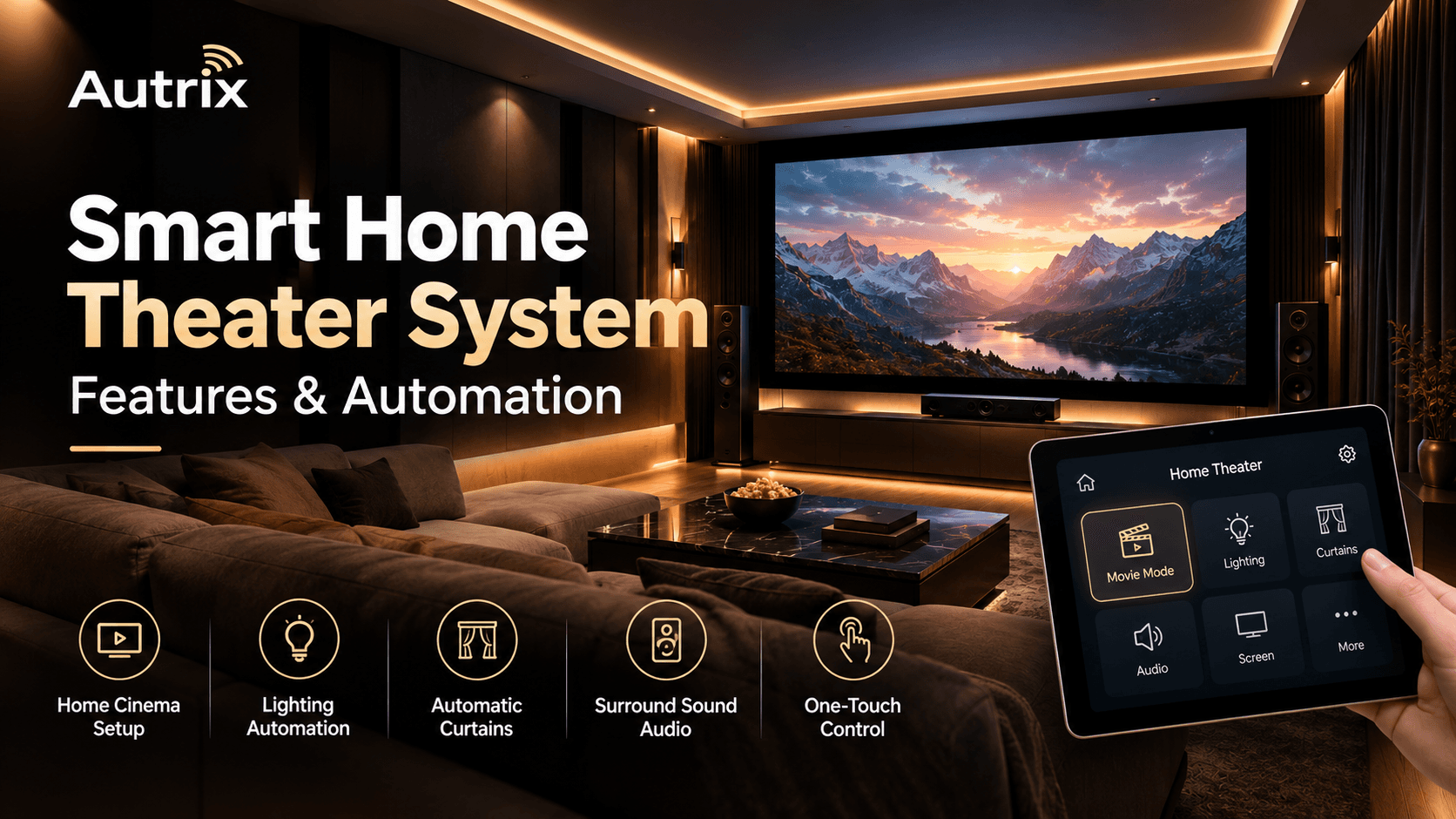
Choose a speaker system based on your room size, seating arrangement, and preferred content. For more ideas, read our guide to a smart home theater system.
3. Consider Your Room Size and Layout
Your room plays a major role in home cinema performance. Even an expensive system may not deliver good results if the speakers and screen are placed incorrectly.
Before buying equipment, consider these points:
Measure the room and decide where the screen and seating will go.
Check the distance between the screen and sofa.
Plan speaker positions for balanced sound.
Consider curtains, carpets, and soft furnishings that can affect sound reflections.
Ensure enough space for the projector, amplifier, and other equipment.
A well-planned room can improve sound quality and viewing comfort.
4. Check Connectivity and Compatibility
A good home cinema system should work smoothly with your existing devices.
Look for features such as HDMI and eARC support, compatibility with streaming devices and gaming consoles, and support for the audio formats you want to use. Bluetooth, Wi-Fi, and mobile app control can also be useful.
Before purchasing, check whether your TV, speakers, amplifier, and other devices support the features you need.
5. Plan Your Budget Carefully
Home cinema systems are available at different price levels. Instead of spending your entire budget on one component, plan for the complete setup.
Include the cost of the screen or projector, speakers, subwoofer, AV receiver, cables, installation, and acoustic improvements.
Tip: Prioritise clear sound, good picture quality, and reliable installation over unnecessary features.
6. Add Smart Home Cinema Lighting Control
Lighting can make a major difference to your movie-watching experience. With lighting automation, you can dim the lights, switch off selected fixtures, or create a comfortable cinema atmosphere.
A compatible home automation system can also combine lighting and entertainment controls into one movie mode. You can activate it using a mobile app, voice command, or smart touch panel.
If you want to connect entertainment, lighting, and other smart features, consider the best smart home automation solutions from Autrix. These features can make your home cinema more convenient and easier to control.
7. Choose Professional Home Cinema Installation
Correct installation helps your home cinema system perform as expected. Professional installers can plan speaker placement, cable routing, screen positioning, and equipment connections.
For a dedicated cinema room, ask about acoustic treatment, ventilation, concealed wiring, and future upgrades before installation begins.
You can also review the available home cinema solutions to understand how a dedicated entertainment setup can suit your space and requirements.