Home automation devices help you control different functions of your home, such as lighting, curtains, air conditioning, door locks, and security systems. Instead of operating every device manually, you can use a mobile app, remote, touch panel, or voice command to manage compatible devices.
For example, you can switch off all the lights before sleeping, close the curtains without leaving your bed, or adjust the air conditioner before arriving home. These functions are possible when suitable devices are connected to a home automation system.
What Are Home Automation Devices?
Home automation devices are electronic products that allow you to control or automate household functions. Some devices work independently through their own apps, while others connect to a central controller that manages multiple functions.
For example, a motion sensor can detect someone entering a corridor and trigger the lights to switch on. This is different from simply turning a smart light on using your phone because the action happens automatically.
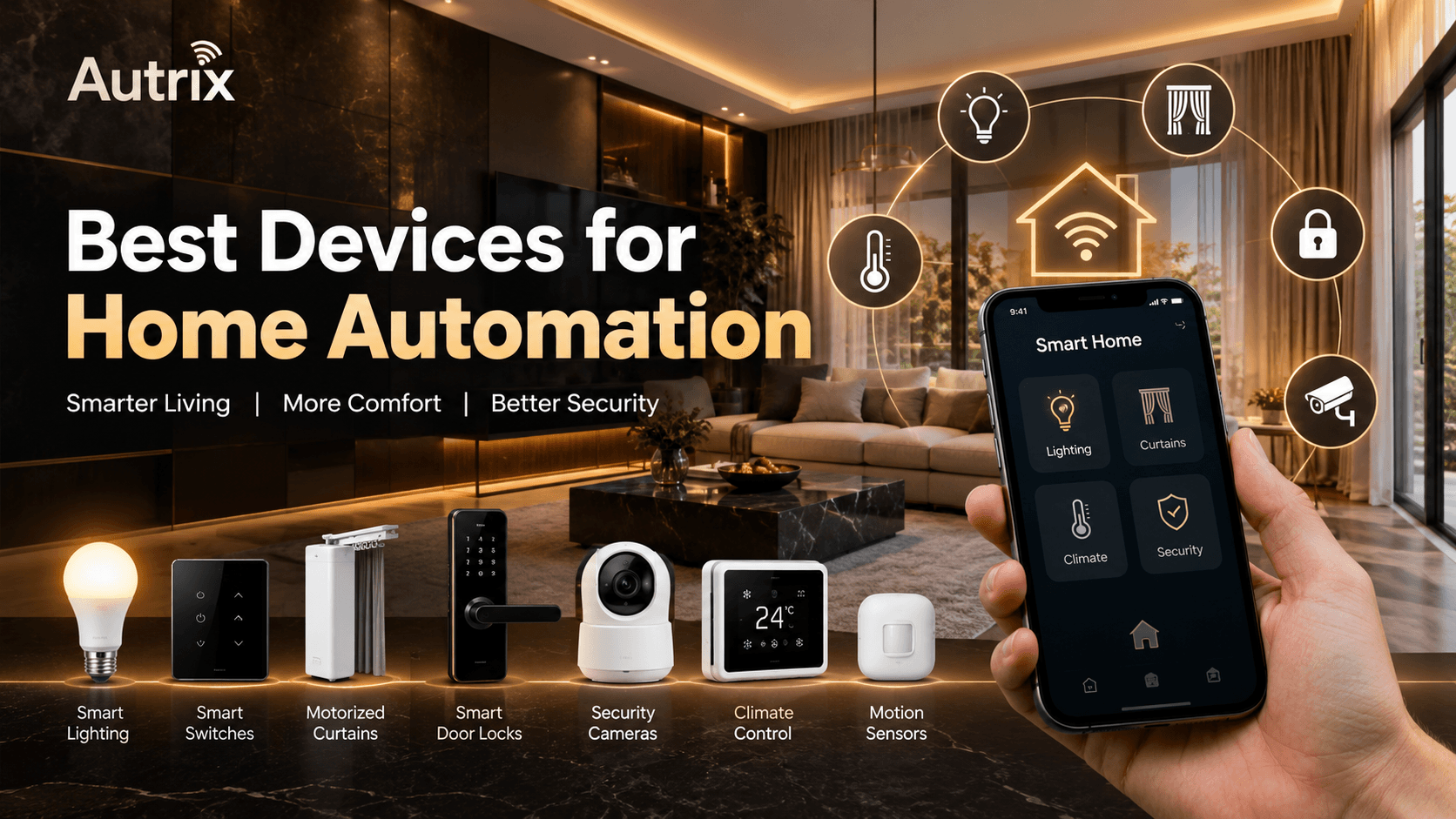
7 Important Home Automation Devices for Your Home
1. Smart Lighting Switches and Dimmers
Smart lighting devices allow you to control your home lights without operating conventional switches every time. Depending on the product, you can switch lights on or off, adjust brightness, create lighting scenes, and set schedules.
Smart switches control connected lights, while dimmers allow compatible lights to operate at different brightness levels. Some systems also support motion sensors and automatic lighting based on schedules.
For example, you can create a movie scene that dims the living room lights or a night scene that keeps selected lights at a low brightness.
These devices are useful in bedrooms, living rooms, kitchens, and hallways. If you want to control multiple lights through a planned system, explore Autrix lighting automation solutions.
2. Automatic Curtain Motors
Automatic curtain systems use an electric motor to open and close curtains along a suitable track. You can control them using a remote, smartphone, or compatible home automation controller.
You can also schedule curtains to open in the morning or close during the afternoon to manage sunlight and privacy. Motorized blinds are another option for suitable windows.
Before choosing a curtain motor, check the curtain weight, track length, motor capacity, noise level, and available power supply. Manual operation during a power failure depends on the motor's design.
Automatic curtains are particularly useful for large windows, bedrooms, and homes with multiple curtains.
3. Smart Door Locks
Smart door locks provide different ways to enter your home without depending only on a traditional key. Depending on the model, access options may include fingerprints, PIN codes, access cards, or a smartphone.
Some locks can also send notifications or allow temporary access for selected users. However, remote control and access logs are not available on every model.
When choosing a smart lock, check the door's compatibility, emergency access method, battery backup, and security features. A smart lock should complement other security measures rather than replace them.
4. Motion, Door and Window Sensors
Sensors help a home automation system respond to changes around the house.
Motion sensors: Detect movement and can trigger lights or selected security actions.
Door and window sensors: Detect when a door or window opens or closes.
Light sensors: Measure surrounding brightness and can help control lighting automatically.
Temperature sensors: Measure room temperature and can trigger compatible climate-control actions.
For example, a motion sensor can switch on a corridor light at night. A door sensor can send an alert when an entry point opens while the home is armed.
Sensor placement and settings are important because incorrect positioning can lead to missed detections or unnecessary alerts.
5. Smart Climate Control Devices
Smart climate control devices help manage compatible air conditioners and other cooling systems. Depending on the equipment, you may be able to adjust temperature, change operating modes, create schedules, or control multiple units through a suitable interface.
A smart thermostat or compatible control panel can manage supported heating and cooling equipment. An infrared controller can operate many air conditioners that use infrared remotes, provided the model is compatible.
These devices can help avoid unnecessary cooling when rooms are not in use. Actual energy savings depend on your settings, usage, equipment, and local conditions.
6. Smart Security Cameras
Smart security cameras allow you to monitor selected areas of your home through a compatible app. Common features include live video, night vision, motion detection, recording, and mobile alerts.
You can install cameras near entrances, parking areas, or other suitable locations. Some models support two-way audio, allowing you to communicate through the camera.
Before buying, check recording options, storage requirements, internet needs, privacy settings, and whether a subscription is required for particular features.
7. Smart Plugs and Home Automation Controllers
A smart plug lets you switch a compatible connected appliance on or off through an app or schedule. It can be useful for selected lamps and other appliances within the plug's electrical rating.
However, switching off the power does not mean every appliance will restart automatically when power returns. Check how the appliance behaves after a power interruption, and never exceed the smart plug's rated load.
A home automation controller serves a different purpose. It connects compatible devices and allows them to work together. For example, a single command could turn off selected lights, close the curtains, and adjust the air conditioner.
How to Choose the Right Home Automation System
Before purchasing home automation devices, consider these points:
Wired or wireless: Wired systems are often planned during construction or renovation, while wireless devices can be easier to add to an existing home.
Compatibility: Confirm that switches, sensors, motors, and controllers can work together.
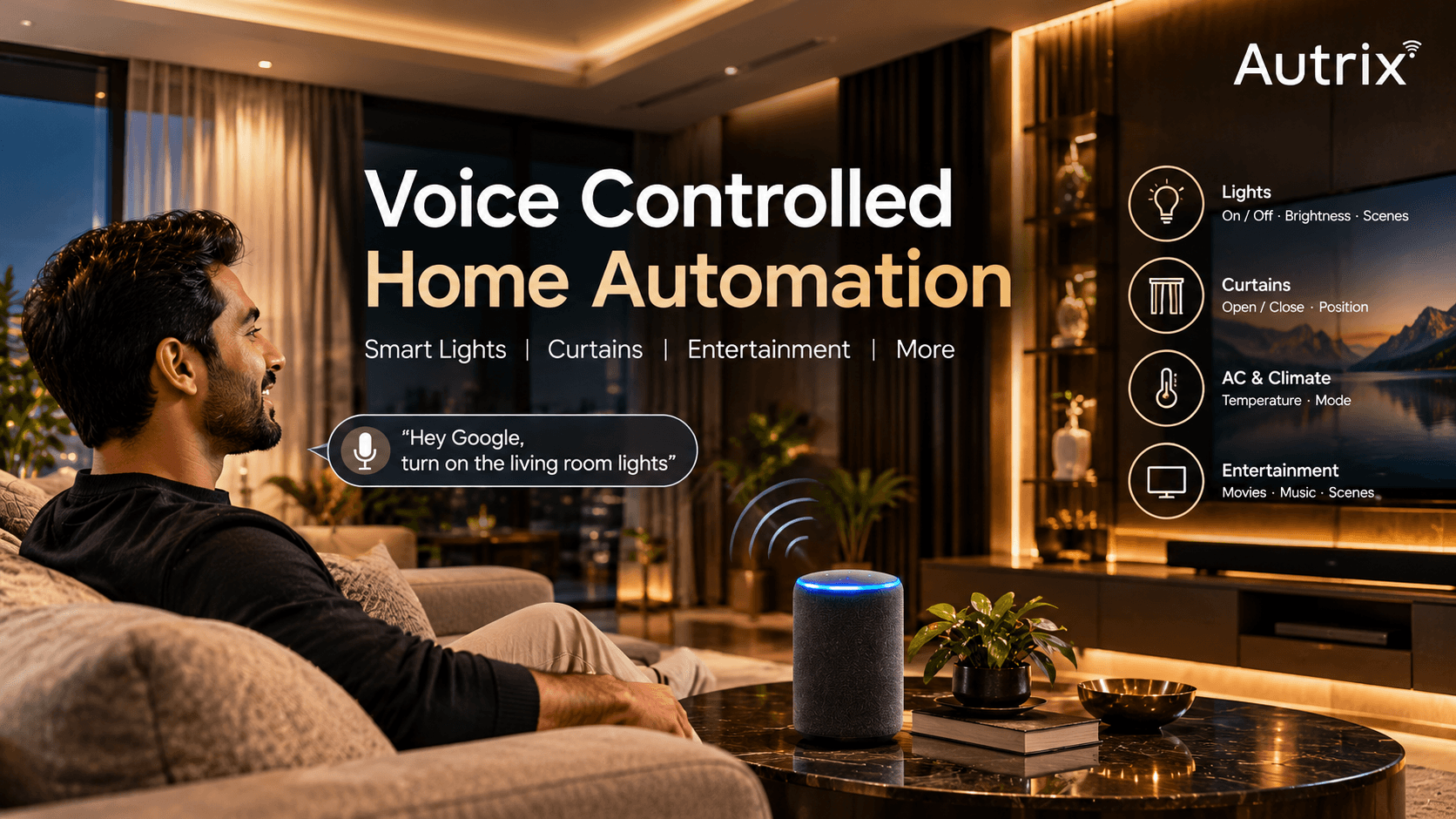
Control options: Decide whether you need mobile app control, voice commands, remotes, or touch panels.
Installation requirements: Check wiring, power supply, network coverage, and professional installation needs.
Future expansion: Choose a system that supports the functions you may want to add later.
Home Automation Solutions by Autrix
Autrix helps homeowners plan home automation according to their requirements, from lighting and curtain automation to smart locks, security, and climate control. Choosing compatible devices and planning their operation together can make everyday tasks easier and provide more consistent control.
Visit Autrix to explore home automation solutions for new and existing homes.