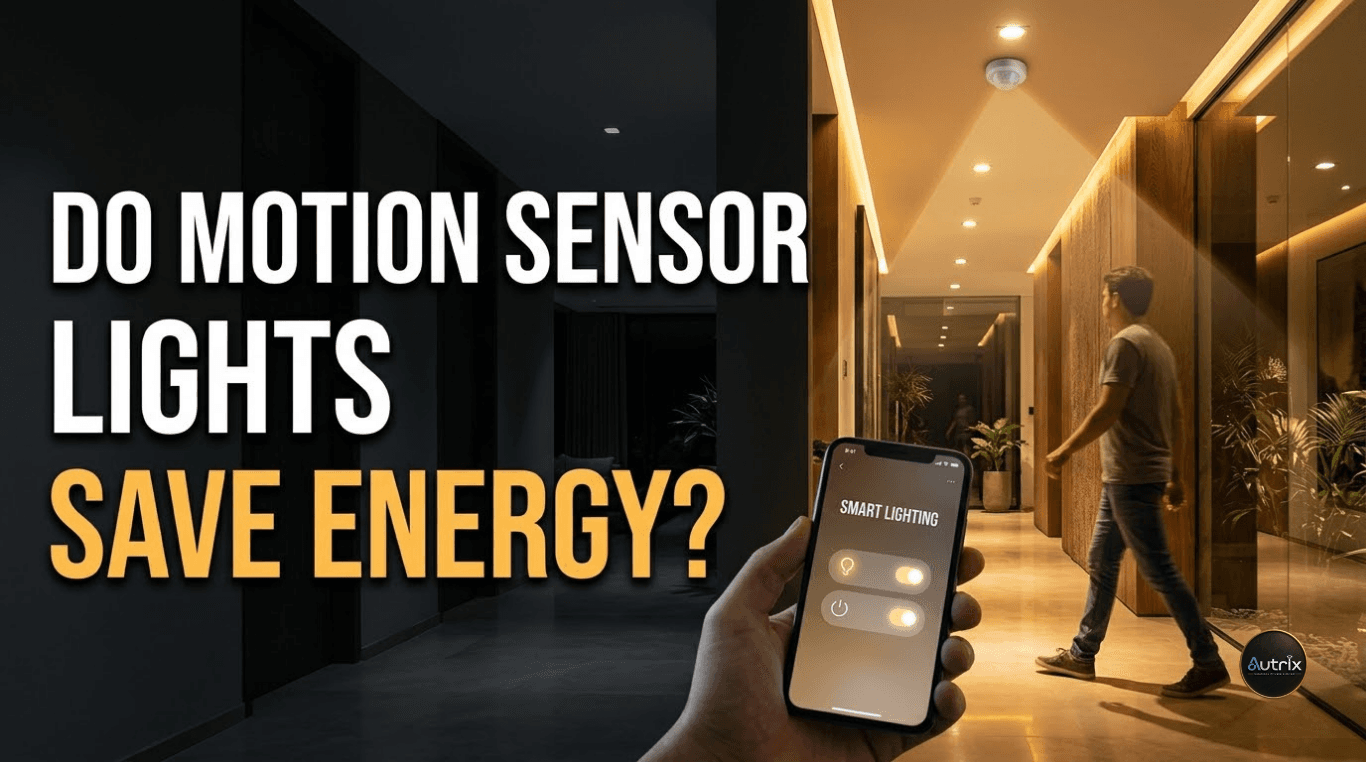
Motion sensor lights can help reduce electricity consumption by switching lights on when movement is detected and turning them off when an area is no longer in use. Unlike traditional lighting that may remain on for hours unnecessarily, motion sensor lighting helps automate light control in areas where people do not need continuous illumination.
However, the amount of energy saved depends on how frequently the lights are used, how long they would otherwise remain on, and the type of lighting installed.
How Do Motion Sensor Lights Reduce Energy Consumption?
Motion sensor lights use sensors to detect movement within a defined area. When movement is detected, the connected light switches on automatically. After a preset period without further movement, the light switches off.
This is particularly useful in spaces where people enter and leave frequently but do not stay for long. By reducing the time lights remain switched on unnecessarily, motion sensor lighting can help lower electricity consumption.
For better results, combine motion sensors with energy-efficient LED lights. LEDs already consume less electricity than many older lighting technologies, while automation helps prevent unnecessary operating hours.
Where Should You Install Motion Sensor Lights?
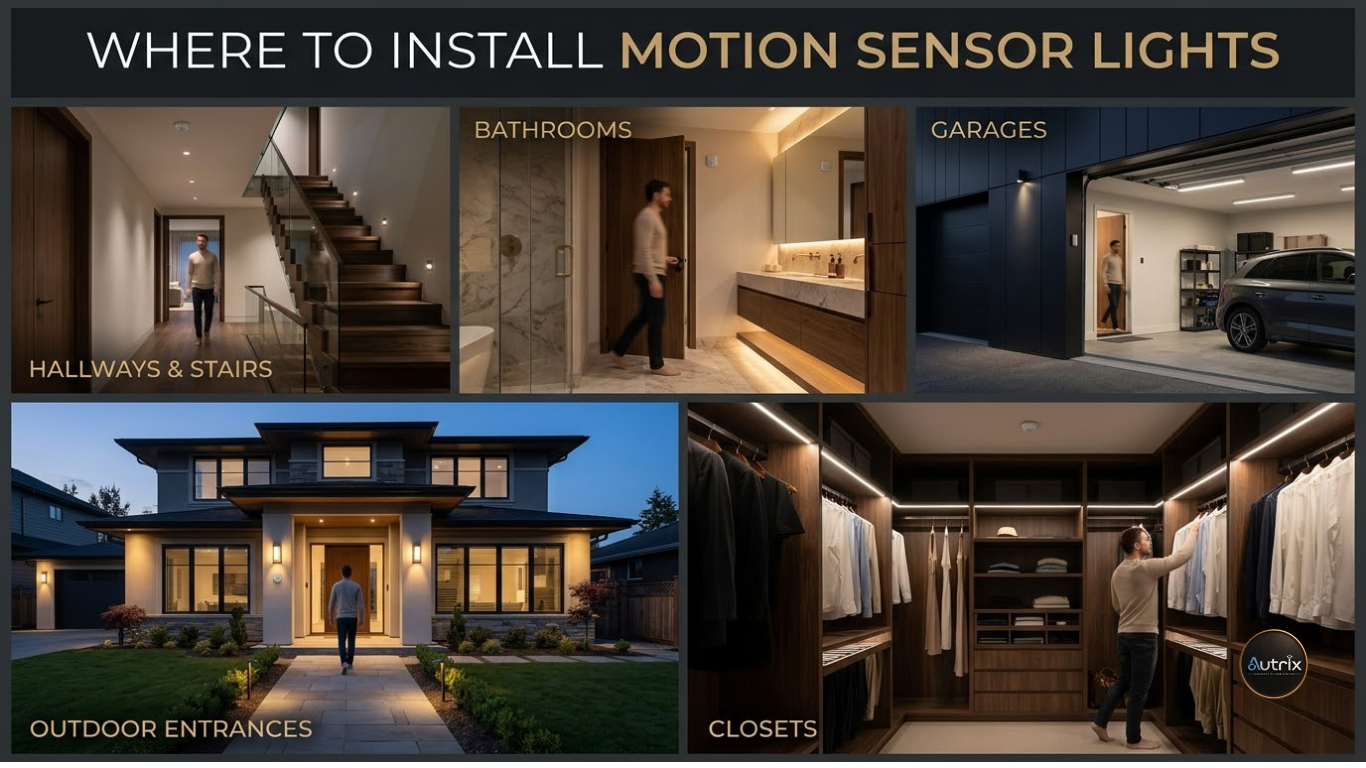
Motion sensor lighting works best in areas where lights are often forgotten or used only briefly, such as:
Corridors and staircases: Lights activate when someone passes through.
Bathrooms and utility rooms: Automatic switching reduces the need for manual control.
Garages and storage areas: Lights operate when someone enters the space.
Outdoor entrances and pathways: Lights activate when movement is detected near an entrance.
Closets and wardrobes: Lighting switches on when the area is accessed.
Correct sensor placement is important. Poor positioning or unsuitable sensitivity settings can cause lights to switch on unnecessarily or turn off while someone is still in the room.
Can Motion Sensor Lighting Work with Home Automation?
Yes. Motion sensors can be integrated into a wider home automation system to control compatible lights automatically. Depending on the system, you can adjust detection sensitivity, set switch-off delays, and combine motion detection with schedules or daylight sensors.
For example, corridor lights can operate at full brightness at night or remain off during the day when sufficient natural light is available. This helps make lighting control more responsive to actual requirements.
With a suitable lighting automation system, motion sensors can also work alongside smart switches, lighting scenes, and other compatible smart home devices.
How Much Energy Can Motion Sensor Lights Save?
There is no fixed energy-saving percentage for every home. Savings depend on how long lights would otherwise stay on, the wattage of the lights, sensor settings, and the number of hours the area is occupied.
For example, if a 10-watt LED light would normally remain on for five hours but automation reduces its operating time to two hours, it uses 30 watt-hours less electricity per day. Actual savings will vary with usage.
Are Motion Sensor Lights Worth Installing?
Motion sensor lights are a practical option for homeowners who want to reduce unnecessary lighting and improve everyday convenience. They are particularly useful in transitional spaces, outdoor areas, and rooms that are used intermittently.
Choosing suitable sensors, efficient LED lights, and appropriate automation settings helps achieve better results. When planned as part of a broader home lighting automation setup, motion sensors can make lighting more convenient while helping avoid wasted electricity.