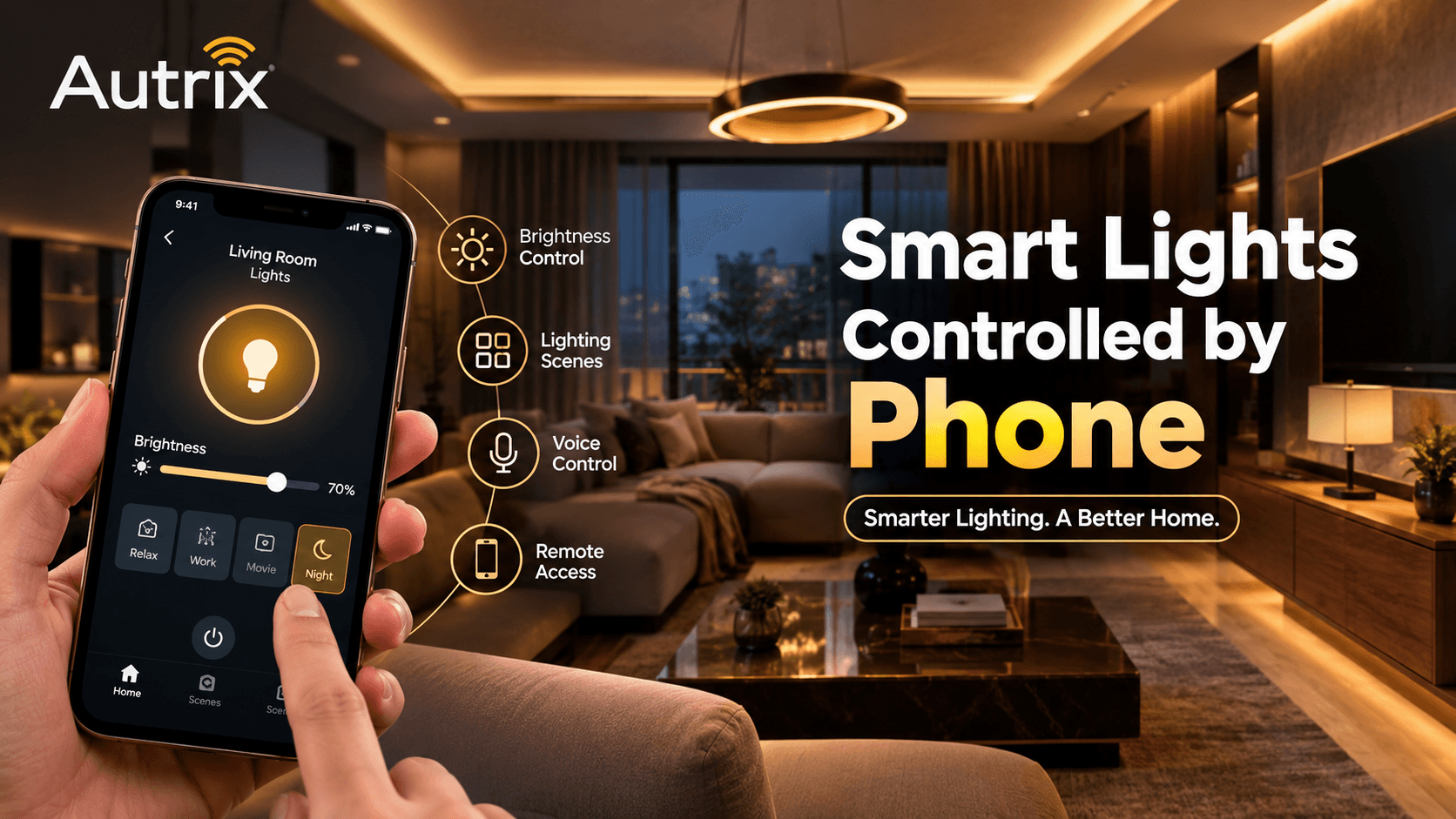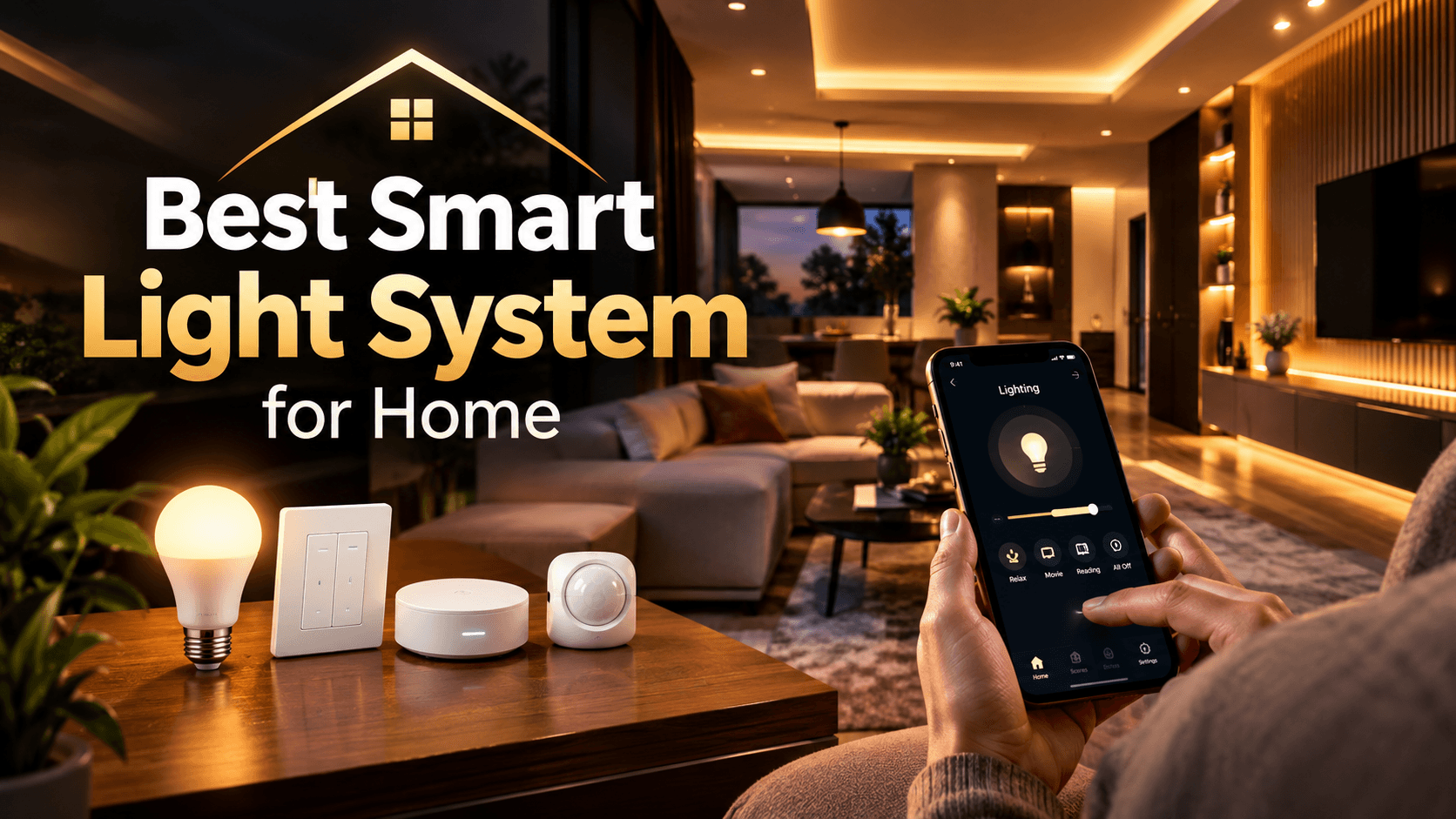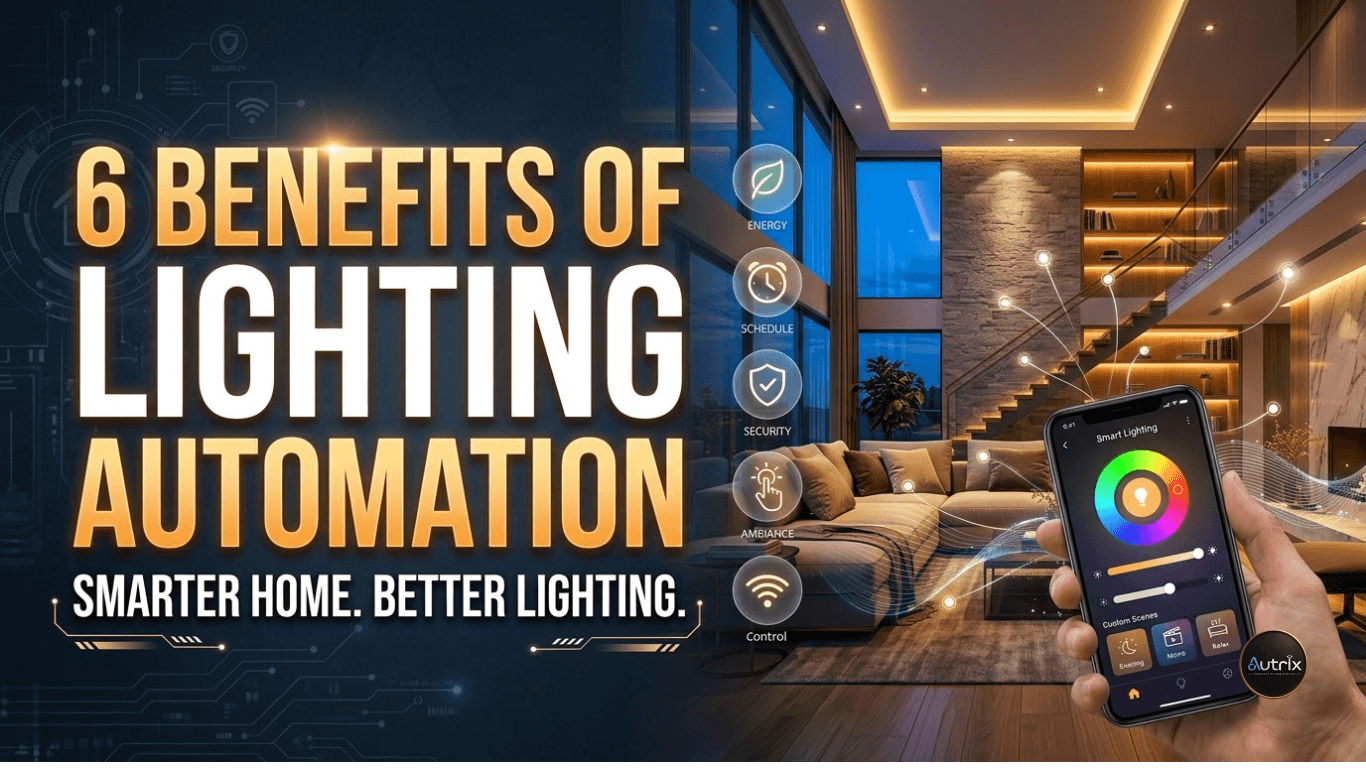
Lighting automation makes it easier to control the lights in your home without relying on manual switches for everything. You can use a smartphone, voice commands, smart panels, or automatic schedules to manage your lighting.
From saving energy to creating comfortable lighting scenes, a smart lighting automation system can make everyday life simpler.
1. Control All Your Lights Easily
With home lighting automation, you can control multiple lights from one place instead of operating every switch individually.
Turn lights on or off using a smartphone.
Control compatible lights with voice commands.
Switch off multiple rooms when leaving home.
Adjust lighting without walking to the switch.
Example: Before going to bed, you can switch off the lights throughout your home with a single command.
2. Reduce Unnecessary Electricity Use
Lights sometimes remain switched on in empty rooms. Lighting automation helps prevent this through schedules, motion sensors, and occupancy sensors.
You can reduce unnecessary lighting by:
Automatically switching off lights in empty rooms.
Setting schedules for regular daily routines.
Dimming lights when full brightness is not required.
Using energy-efficient LED lights with smart controls.
The actual energy savings depend on your lighting fixtures, usage habits, and automation settings.
3. Set the Right Lighting for Every Activity
Different activities need different levels of brightness. Smart lighting lets you create preset scenes for common activities instead of adjusting each light separately.
For example:
Reading: Bright, focused lighting.
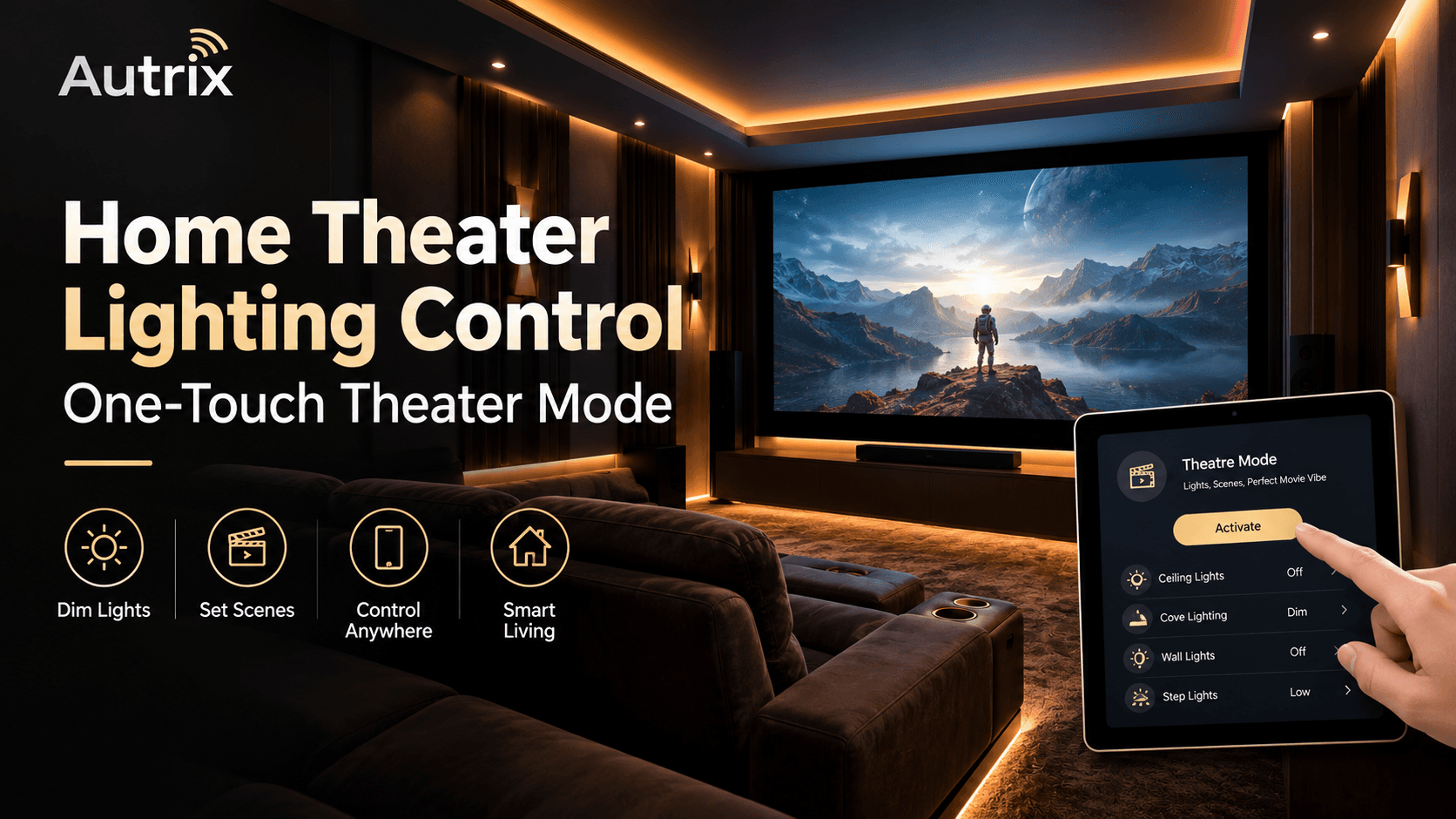
Movie time: Soft, dimmed lighting.
Dinner: Warm, comfortable lighting.
Bedtime: Low lighting for winding down.
Working from home: Clear lighting for your workspace.
These lighting scenes make it easier to create the right atmosphere in each room.
4. Make Your Home Safer with Automatic Lighting
Motion sensor lighting can improve visibility around your home and reduce the need to search for switches in the dark.
It is particularly useful for:
Staircases and corridors.
Main entrances and outdoor pathways.
Garages and utility areas.
Areas where lights are often forgotten.
You can also schedule selected lights or control them remotely to make your home appear occupied while you are away. Lighting automation supports home security but does not replace alarms or surveillance systems.
5. Personalise Lighting for Every Room
Every room has different lighting needs. A smart lighting automation system allows you to adjust the lighting according to how each space is used.
Room | Useful lighting setup |
|---|---|
Living room | Adjustable brightness and entertainment scenes |
Bedroom | Soft evening lighting and bedtime controls |
Kitchen | Bright task lighting for cooking |
Bathroom | Convenient automatic lighting |
Hallway | Motion-activated lighting |
The right setup depends on your room layout, existing fixtures, and daily routine.
6. Connect Lighting with Other Smart Home Features
Lighting automation can work with other compatible home automation systems to make daily routines easier.
For example, you can create routines that:
Open motorised curtains and switch on selected lights in the morning.
Dim the lights and close the curtains for movie time.
Turn on entrance lighting when you arrive home.
Include lighting in a wider evening or bedtime routine.
If you are planning a connected home, explore Autrix lighting automation solutions and curtain automation to understand how these features can work together.
Is Lighting Automation Right for Your Home?
Lighting automation is a practical option if you want easier control, flexible lighting scenes, and less unnecessary electricity use. You can automate selected rooms or plan a complete home lighting automation system.
Before installation, consider your existing wiring, light fixtures, preferred controls, and whether you need wired or wireless automation. Proper planning helps ensure the system suits your home and remains convenient to use.